The Aegean Sea contains more inhabited islands than any comparable body of water on Earth — and ferries remain the connective tissue that binds them. Island hopping here is not a novelty; it is how Greeks have traveled for millennia.
Piraeus and the mainland hubs
Most Aegean island journeys begin at Piraeus, the port of Athens. The main ferry terminal sprawls across several gates — E1 through E10 — each serving different island groups. High-speed catamarans depart from separate piers. Arriving at least ninety minutes before departure is prudent during peak summer; the walk between gates can exceed fifteen minutes.
Secondary hubs include Rafina (closer to Athens Airport, serving the Cyclades), Lavrio (southeastern islands), and Thessaloniki for northern Aegean routes. Understanding which hub serves your destination prevents costly taxi rides across Attica.
Ferries cluster by island group: Cyclades (Santorini, Mykonos, Naxos), Dodecanese (Rhodes, Kos, Patmos), North Aegean (Lesvos, Chios, Samos), and Saronic Gulf (Hydra, Aegina, Poros). Direct inter-group connections exist but are less frequent.
Operators and vessel types
Greece's ferry market includes large operators — Blue Star Ferries, SeaJets, Golden Star Ferries, Hellenic Seaways — alongside regional companies serving smaller islands. Conventional ferries are slower but more stable in Meltemi winds; high-speed catamarans cut travel time dramatically but cancel more readily in rough weather.
Vessel size varies from car ferries carrying 1,500 passengers to small landing craft serving remote harbors without proper piers. The latter require passengers to embark via gangplank or tender — part of the adventure on islands like Anafi or Iraklia.
Planning an island-hopping itinerary
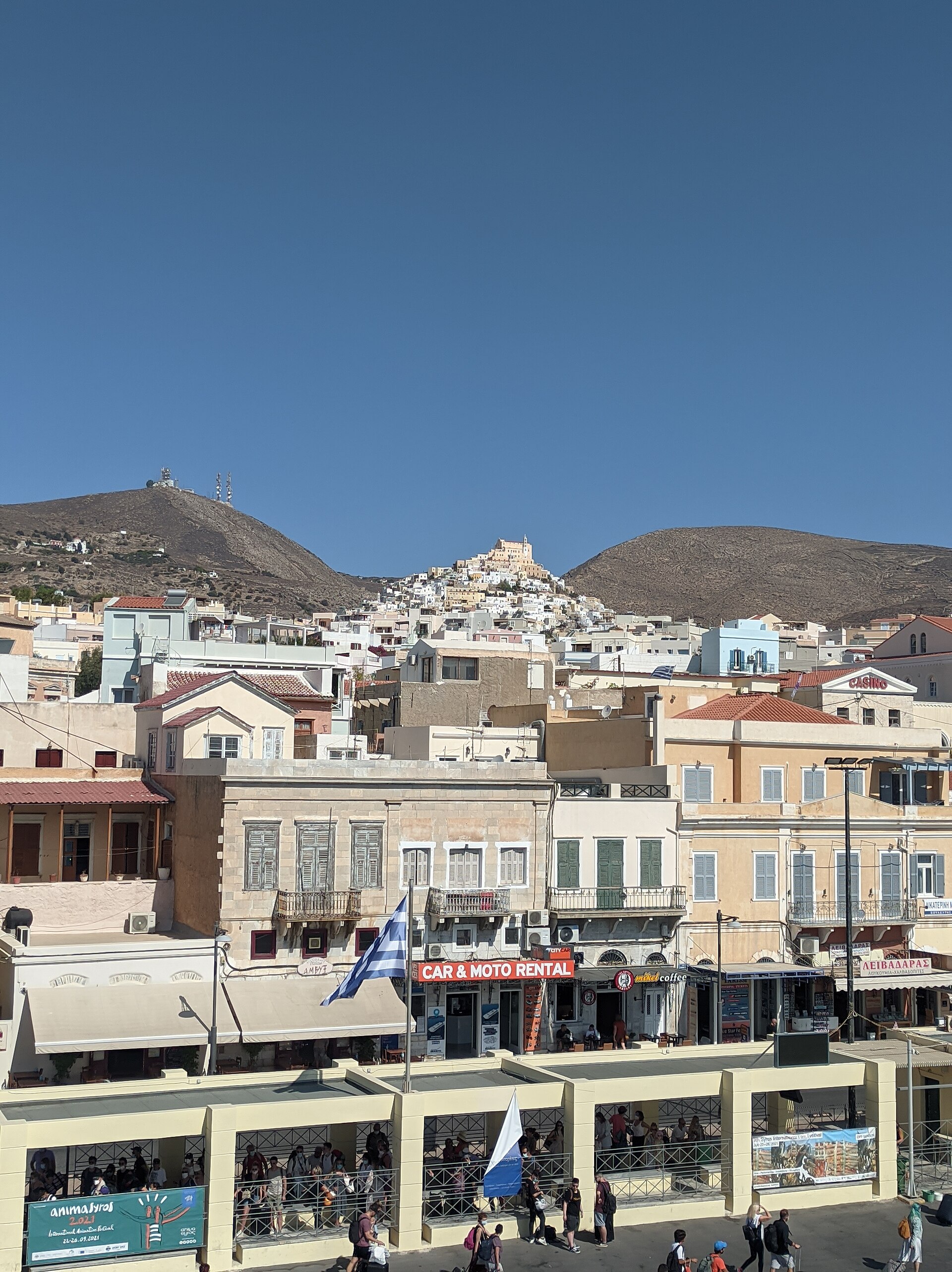
Successful Aegean itineraries balance geographic logic with schedule reality. A classic Cyclades loop might run: Piraeus → Syros → Mykonos → Naxos → Santorini → return via Ios or Paros. Allow buffer days — summer schedules slip when winds rise, and missed connections strand travelers overnight in port towns that, fortunately, are rarely unpleasant.
Overnight ferries between Piraeus and Crete (Heraklion or Chania) save a hotel night and arrive at dawn — a spectacular introduction to the island. Cabins are recommended for these eight- to nine-hour crossings; deck seating becomes uncomfortable after midnight.
The Meltemi factor
From July through September, the Meltemi — a strong north wind — affects Cycladic routes. Ferries still operate but high-speed services cancel first. Conventional ferries roll noticeably but complete most journeys. Travelers prone to seasickness should favor morning departures before wind builds, choose larger vessels, and sit amidships on lower decks.
Port culture and practical tips
Greek island ports are social spaces. Expect tavernas, bakeries, and travel agencies clustered within walking distance. Ticket changes are handled at agency kiosks or operator offices near the quay. Vehicle tickets must be purchased in advance during August — foot passengers usually have more flexibility.
Island hopping rewards flexibility and curiosity. The ferry schedule is a framework, not a prison. Miss a boat, and you discover a harbor town you never planned to visit. That, more than any single island, is the essence of Aegean travel.